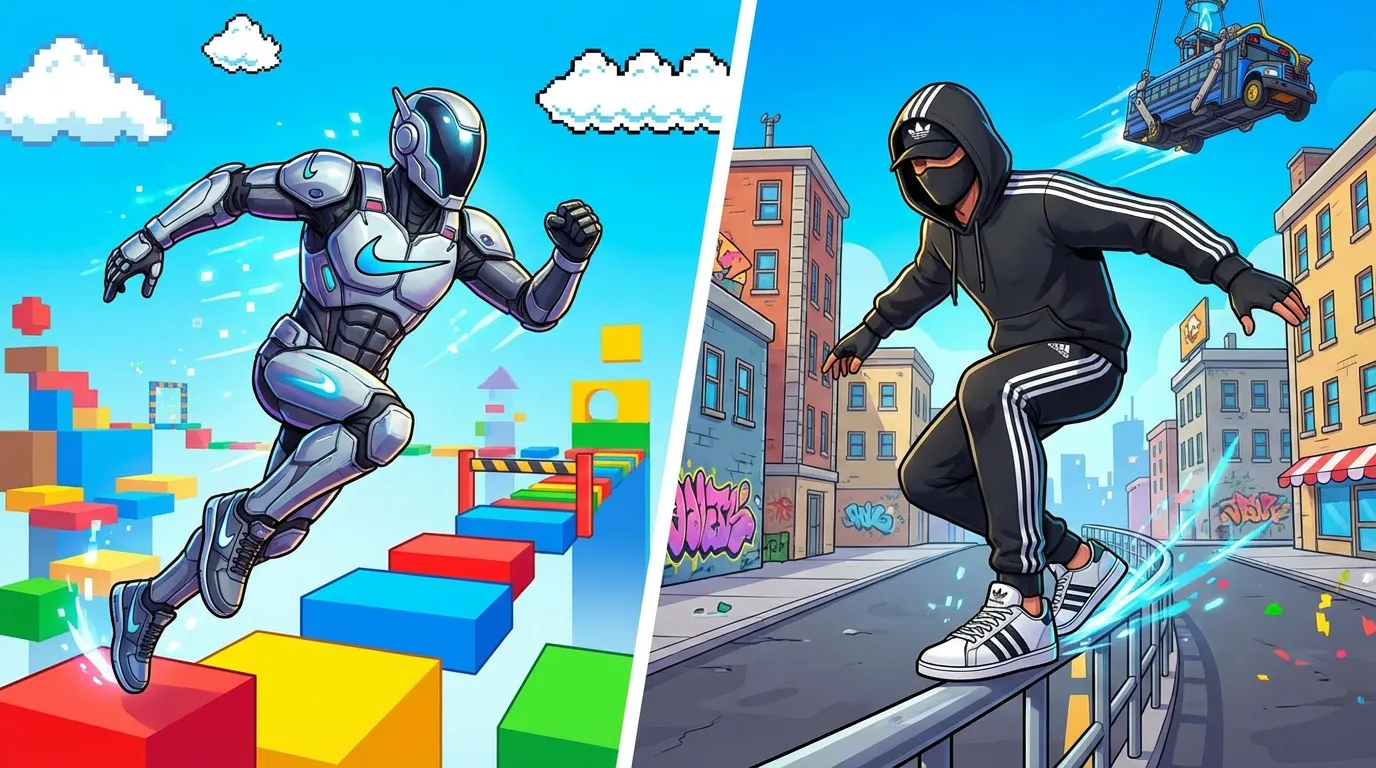
Nike vs Adidas: Logo Integration in Game Skins
Nike and Adidas are bringing their iconic logos into gaming, using platforms like Roblox and Fortnite to connect with younger audiences. Both brands incorporate their branding into in-game skins, but their approaches differ:
- Nike focuses on consistent branding tied to sports themes, with prominent Swoosh placements on sneakers and apparel. It uses events like Air Max Day to boost visibility.
- Adidas takes a flexible approach, blending its Three Stripes and Trefoil logos into diverse styles, including streetwear and soccer-inspired designs. Weekly updates and UGC (user-generated content) drops keep its offerings dynamic.
These strategies highlight how gaming has become a space for brands to build recognition and loyalty. Below, we compare their methods and explore best practices for logo integration in game skins.
Nike Logo Integration in Game Skins
Nike's Branding in Roblox
Nike's NIKELAND on Roblox acts as a virtual sports campus, attracting over 4 million monthly active users. The iconic Swoosh is prominently featured on custom sneakers like the Air Force 1, apparel, and even in the environment itself. According to platform analytics, 70% of visitors engage with Nike's apparel zones, showcasing the effectiveness of this immersive branding strategy.
While Roblox focuses on creating an immersive retail environment, Fortnite emphasizes performance and style.
Nike Logo Usage in Fortnite
On November 21, Nike launched its "Kicks" cosmetics in Fortnite, offering customizable sneakers. The Swoosh is seamlessly integrated into the design of shoe uppers, socks, and performance outfits, blending athletic and streetwear styles. Air Max Day events brought further attention to the Swoosh, featuring Air Max DN and Air Max 95-inspired skins. Nike also collaborated on character skins, such as those featuring LeBron James, where the logo appears prominently on jerseys, shorts, and footwear, ensuring maximum visibility.
Nike's Design Style
Nike tailors the Swoosh to fit different gaming contexts while staying true to its brand identity. For performance-focused skins, the logo is stylized with angular distortions and speed-line effects that suggest motion - this design approach was especially evident in Fortnite’s Air Max-themed releases. In NIKELAND on Roblox, graffiti-inspired overlays reflect sneaker culture, adding an urban edge. By using footwear as a focal point in lobbies and character screens, Nike reinforces the Swoosh as a symbol of status and creativity in the gaming world. These thoughtful design choices connect immersive branding with in-game performance, strengthening Nike's reputation as a leader in both innovation and athletic performance.
Adidas Logo Integration in Game Skins
Adidas Branding in Roblox
In December 2023, Adidas made its mark on Roblox by launching pop-up stores that showcased licensed digital wearables. These virtual items prominently feature Adidas's iconic branding, such as the three-stripes on firebird tracksuits and the Trefoil logo on accessories like the Oversized Trefoil Cross-Body Bag and Trefoil Crown with Halo. To keep things fresh, Adidas rolls out weekly updates, introducing UGC (User-Generated Content) apparel inspired by the SS24 collection. Additionally, limited-edition pieces from the adidas x Rush X collaboration hit the Roblox Marketplace, offering a mix of accessibility and collectibility. These digital creations are available in seven Roblox experiences, including popular games like Princess Dress Up Obby, Seaboard City, and Ultimate Ragdoll Playground.
This strong presence on Roblox highlights Adidas's ability to connect with players through culturally relevant strategies, laying the groundwork for its approach in Fortnite.
Adidas's Collaborations in Fortnite
In Fortnite, Adidas takes a different approach, focusing on cultural storytelling rather than straightforward product placement. The Three Stripe Squad Bundle blends the brand’s identity with elements of streetwear and soccer culture, creating a style that appeals to Gen Z players. Instead of sticking to traditional athletic marketing, Adidas integrates avatar fashion with influences from music and lifestyle trends, ensuring its designs feel authentic and relevant to Fortnite’s audience.
Roblox and Fortnite have become pivotal platforms for Adidas to engage with U.S. Gen Z audiences. Skins and digital accessories act as extensions of its apparel marketing, seamlessly connecting the brand’s physical and digital presence. As part of its Web3 strategy, Adidas has also linked these gaming integrations to its ALTS by Adidas NFT collection, which boasts over 250 unique traits and 80 digital wearables. These NFTs are designed for gaming platform integration, with plans to roll them out by 2025.
Adidas's Design Elements
Adidas strikes a balance between subtlety and brand recognition in its designs. The three-stripes are often woven into tracksuits and accessories, while the Trefoil logo appears in ways that complement the overall aesthetic instead of dominating it. This thoughtful integration allows the brand to adapt its identity across different gaming contexts, whether it’s soccer-inspired outfits or urban streetwear. By staying true to its core visual language, Adidas ensures consistency across both the physical and digital realms, while tailoring its designs to fit the unique vibe of each platform.
The Dark Truth Behind Weird Skins
Allow advertising and social cookies to watch embedded videos.
Nike vs Adidas: Comparing Logo Strategies
Logo Size and Placement
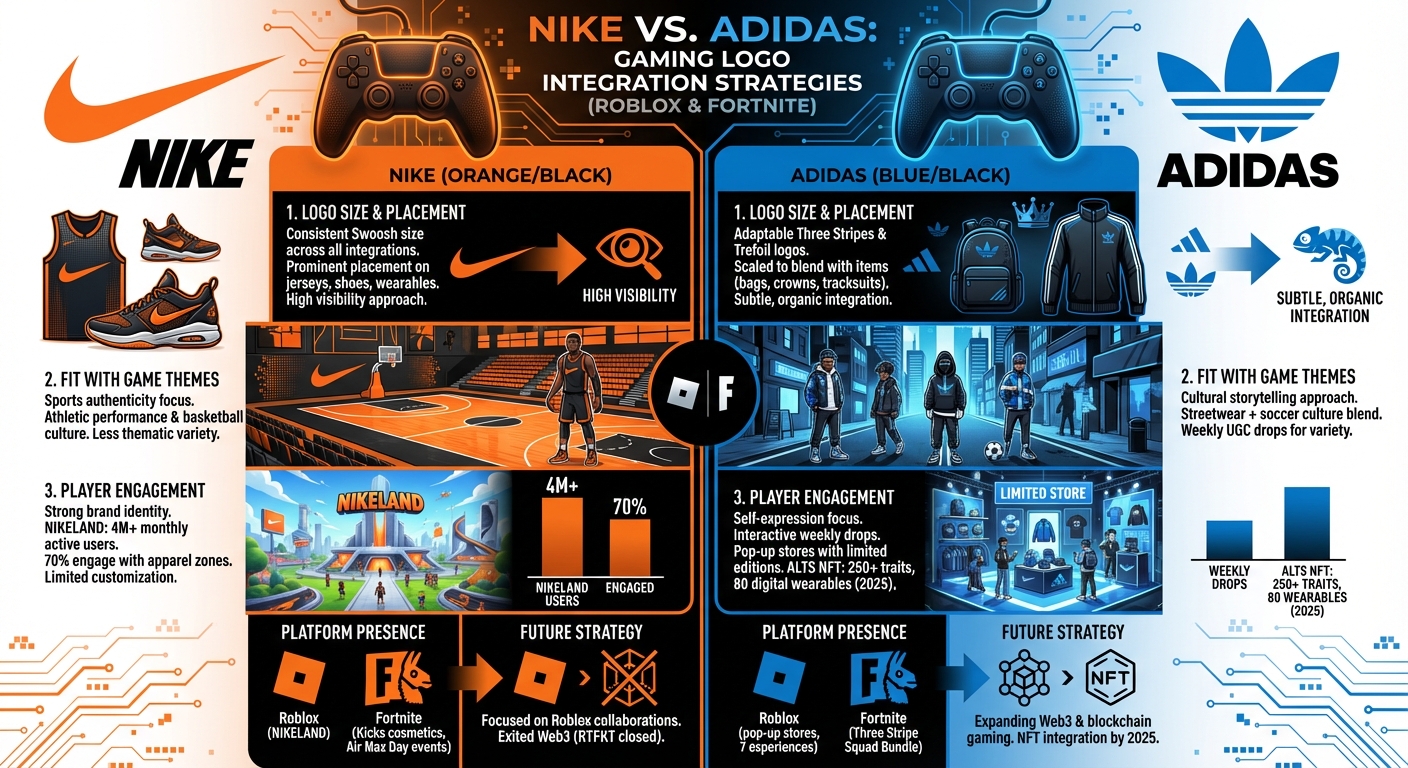
Nike’s iconic Swoosh sticks to a consistent size across its Roblox integrations, especially in collaborations with Jordan Brand on apparel and accessories. This approach ensures instant brand recognition, with the Swoosh prominently appearing on jerseys, shoes, and other wearables.
Adidas, on the other hand, opts for a more adaptable approach. The Three Stripes and Trefoil logos are scaled to blend seamlessly with items like the Oversized Trefoil Cross-Body Bag and Trefoil Crown with Halo. Instead of demanding attention, Adidas incorporates its branding in a way that feels organic, giving players more freedom to decide how visible the logos are in their customized looks. This subtlety works well for tracksuits and accessories, enhancing the overall aesthetic without overpowering it.
Fit with Game Themes
Nike's strategy is rooted in sports authenticity. Its branding highlights athletic performance and basketball culture, making the Swoosh a natural fit in sports-centric Roblox experiences and competitive gaming settings. While this approach strengthens Nike’s identity as a sports brand, it offers less variety in thematic appeal.
Adidas takes a different route, focusing on cultural storytelling. For instance, the Three Stripe Squad Bundle in Fortnite merges streetwear with soccer culture, appealing to Gen Z players by tapping into music and lifestyle trends rather than sticking strictly to athletic themes. In Roblox, Adidas keeps things fresh with weekly UGC (user-generated content) drops, creating buzz around limited-edition items available through virtual pop-up stores. This flexibility allows Adidas to adapt its branding to fit the unique vibe of each platform, whether it’s urban fashion or sports-inspired designs.
Player Perception and Immersion
Nike’s consistent use of the Swoosh reinforces a strong brand identity, but its approach leaves less room for player-specific customization compared to Adidas. Adidas, with its interactive weekly UGC drops and exclusive releases, leans into self-expression. Pop-up stores in Roblox attract millions of players eager to snag limited-edition items, fostering a sense of excitement and individuality.
Looking ahead, Adidas is expanding its digital presence with the ALTS by Adidas NFT collection, which will feature over 250 unique traits and 80 digital wearables integrated into gaming by 2025. Meanwhile, Nike remains focused on its Roblox collaborations, particularly after winding down its RTFKT division. These differing strategies not only influence their immediate in-game impact but also shape their broader digital branding approaches, offering valuable insights into how logos can be effectively integrated into virtual spaces.
Best Practices for Logo Integration in Game Skins
Designing Logos for Digital Accessories
When it comes to integrating logos into game skins, subtlety is key. A logo should enhance the design, not dominate it. Experts suggest that branded accessories should feel like a natural part of the game world, not an intrusive advertisement. For example, sneakers look best with a medium-sized logo placed on the outer side panel or heel, paired with a smaller logo on the tongue. Avoid oversized designs that distort the shoe's shape. Backpacks and cross-body bags benefit from a centered logo on the main pocket or top flap, with smaller accents on straps or zippers. For jackets and hoodies, a chest or shoulder badge keeps the design balanced, as covering the torso can flatten the look and obscure details. These placement techniques help logos feel integrated rather than forced.
Contrast is often more important than size. Test how the logo appears from typical gameplay perspectives, such as Fortnite’s third-person view or Roblox’s default angle. Simplify shapes and avoid fine text that might blur or become pixelated. White logos on darker backgrounds or logos with subtle outlines tend to stand out. Incorporating brand-specific design elements, like Adidas’s three stripes or Nike’s swoosh, can boost recognition without relying on oversized logos. To ensure the branded item feels like part of the game’s world, match the material, shading, and detail level to the game’s art style - use a vibrant, stylized look for Fortnite or a blockier, low-resolution aesthetic for Roblox.
Using Tools for Skin Design
To streamline the creation of game-ready skins, tools like Alive Games for Skins offer practical solutions. This browser-based editor provides customizable templates and exportable formats for popular games like Roblox, Fortnite, CS2, and Minecraft. Designers can start with base templates - such as high-top sneakers or tactical backpacks - and experiment with logo placement, scaling, and color contrasts. The tool also allows users to preview designs from in-game perspectives, making it easy to test variations like Nike-style side logos or Adidas-style wraps. This ensures the logo remains readable and visually appealing, even at standard gameplay distances. Once finalized, the skins can be exported in formats optimized for the target game, reducing the risk of issues like stretched or clipped logos.
A good workflow begins with selecting the right template for the game to ensure UV maps align with the engine's requirements. Import high-resolution logos into the 2D template, keeping key elements away from seams or high-distortion areas. Rotate the model in the 3D preview to check for clarity from all angles and at various zoom levels. Adjust color contrasts and background shapes to make the logo pop under the game’s lighting conditions. This process not only improves logo integration but also aligns with the digital branding trends set by companies like Nike and Adidas.
For added versatility, designers can create a master template for items like sneakers or jackets and easily produce multiple branded variations. By changing colors, materials, and logo finishes - such as reflective swooshes or monochrome trefoils - they can create diverse options. Scheduling these variations as limited-time releases keeps the brand fresh and engaging. These efficient workflows enable designers to adapt branding elements to match evolving game aesthetics while maintaining a polished, professional look.
Conclusion: Nike vs Adidas in Game Skins
The way iconic brands like Nike and Adidas are adapting their logos for digital platforms highlights the evolving relationship between brands and gamers. Nike has taken a consistent approach, integrating its branding into platforms like Roblox and Fortnite, while Adidas opts for more dynamic strategies, including seasonal pop-ups and user-generated content (UGC), to seamlessly fit its logos into game aesthetics. Looking ahead, Adidas is diving back into Web3 and blockchain gaming for 2025, whereas Nike has stepped away from Web3 initiatives, including the closure of RTFKT. These contrasting strategies shape not only their brand identities but also how players engage with their digital gear.
For creators, these strategies offer valuable insights into digital accessory design. The success of branded skins often depends on how naturally a logo fits within a game’s visual style. Nike focuses on broad brand integration, like its Jordan Brand footwear, which ensures consistent exposure but limits customization. On the other hand, Adidas leans into variety and experimentation, catering to players who seek more personalized experiences.
If you're a creator interested in designing branded skins, Alive Games for Skins offers a streamlined solution. This web-based editor features customizable templates for games like Roblox, Fortnite, Counter-Strike 2, and Minecraft, with exportable formats that eliminate the need for additional software. Whether you’re aiming to replicate Nike's polished consistency or experiment with Adidas-inspired creativity, this tool removes technical hurdles and supports both individual creators and game studios.
The bottom line? Logos should enhance the overall design, not dominate it. By studying how Nike and Adidas approach branding and using tools that simplify the creative process, creators can develop skins that feel authentic, immersive, and perfectly suited to the gaming world.
FAQs
How do Nike and Adidas use gaming platforms to connect with younger audiences?
Nike and Adidas have found a clever way to connect with younger audiences by tapping into gaming platforms like Roblox and Fortnite. They’ve integrated their logos into virtual accessories, such as skins, allowing players to outfit their avatars with branded apparel and gear. It’s a playful and immersive way for gamers to interact with these brands.
This approach not only boosts brand visibility but also strengthens their bond with younger players, who love adding a personal touch and showcasing their style in the gaming world.
How do Nike and Adidas incorporate their logos into game skins?
Nike tends to incorporate its logos in a more understated way, weaving them into the design of game skins so they feel like a natural part of the overall look. On the other hand, Adidas takes a bolder route, placing its logos front and center, making its branding a standout feature of the skin's design.
These contrasting strategies highlight each brand's distinctive style and marketing approach, giving players a range of choices to match their personal taste.
How do Nike and Adidas seamlessly integrate their logos into game skins?
Nike and Adidas weave their logos into game skins by carefully designing them to suit the distinct visual style of each game. Their goal is to make these logos seamlessly fit into the in-game environment, enhancing the overall experience for players.
To achieve this, they adjust elements like colors, textures, and logo placement to match the game's aesthetic. This ensures the logos feel like an integral part of the digital world, rather than just a slapped-on addition.