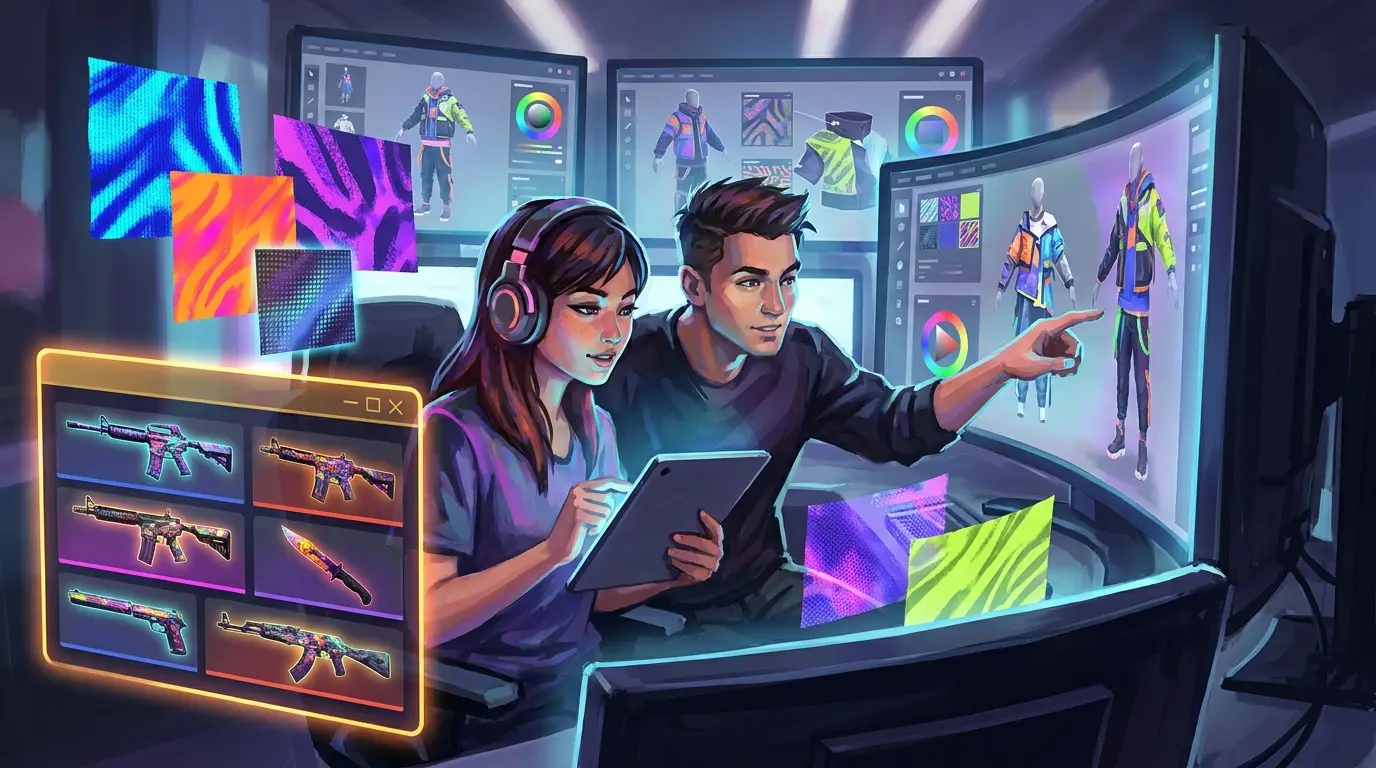
FiveM Server Monetization With Custom Asset Drops
I believe the future of fivem server monetization is not pay-to-win perks, risky gray-area sales, or random VIP gimmicks. It is custom asset drops. More specifically, it looks like cosmetic-first drops built around identity, community, and design workflows you can reuse over time, and that honestly makes a real difference. If someone runs a FiveM server in 2025 and beyond, the smartest money is probably in original clothing, skins, uniforms, and branded items players actually want to wear on that server.
The reason this matters is that the old server monetization playbook is getting weaker. Rockstar and Cfx rules still put pressure on anything that looks like direct advantage selling, loot-box style rewards, or reselling assets a server owner does not fully own. Players are also often more willing to pay for status, style, and a sense of belonging than for blunt power, and that pattern has been clear for a while. Live-service games have shown this for years, and in most cases FiveM is moving in the same direction.
So the view here is simple: for long-term revenue, build a cosmetic drop system around original assets and use fivem clothing templates to ship faster. That approach usually fits player behavior better and comes with less risk. In this piece, the focus is on why that model is safer, how pricing usually works, why it fits how players spend, and where many server owners often get it wrong.
Cosmetic drops are the safest real business model in FiveM
The main reason this works so well is compliance. FiveM monetization is not a free-for-all, and treating it that way usually gets server owners in trouble quickly. In recent guidance across the ecosystem, the same pattern keeps showing up: cosmetic items are the clearest route. That includes custom clothing, liveries, cosmetic badges, uniform packs, and roleplay identity items.
Pricing signals point in that direction too. Current FiveM monetization guidance suggests a common ladder: $5 to $10 for small packages, $10 to $25 for medium packages, $25 to $50 for larger or VIP-style packages, and $50 to $100 for lifetime access tiers. Those numbers do not prove market averages. Still, they show how operators are already packaging value around community access and cosmetics, which is probably the clearest pattern right now.
| Package Type | Typical Price Range | What Fits Best |
|---|---|---|
| Small drop | $5-$10 | Single outfit, patch, cosmetic badge |
| Medium pack | $10-$25 | Wardrobe bundle, faction uniform set |
| Premium/VIP | $25-$50 | Seasonal collection, exclusive style set |
| Lifetime tier | $50-$100 | Long-term access to cosmetic releases |
For this view, the exact dollar amount matters less than the structure behind it. Players already understand digital cosmetic value from other games, so this usually feels familiar in practice. A custom police department uniform pack makes sense. A streetwear drop for civilians also makes sense. The same goes for a limited event jacket. By comparison, selling raw power usually feels wrong.
According to Cfx community guidance, monetization is still possible when operators stay within the rules and use approved practices. That is why cosmetic-only drops make practical sense. They are also, arguably, the easiest lane to defend for anyone building around server clothing, identity items, and event-themed cosmetics without drifting into pay-to-win territory.
We handle monetization end to end, with built-in fraud protection and full chargeback coverage.
The real product is not clothing alone. It is server identity.
A lot of server owners probably sell themselves short on what they’re really offering. They may think it’s a jacket, a vest, or a department shirt. But that usually isn’t the real thing being sold. It’s belonging, and for a roleplay server that is often the whole point.
That’s why fivem clothing templates matter so much. They cut production time, make it easier to create different versions, and help creators turn one base idea into a full drop. Honestly, that’s really useful. One design system can grow into faction outfits, donor cosmetics, event exclusives, seasonal sets, and creator collaborations, which saves a lot of repeated work.
If a starting point is needed, learning how to build better outfit systems with FiveM Clothing Templates for Custom Server Outfits is a good next step. That workflow matters because monetization often gets better when drops feel consistent across the server instead of random. It sounds simple, but it matters here.
So here’s how I’d probably build the first four drops for a roleplay server:
Drop 1: Core identity pack
Shape the server’s visual style, because that usually helps. Civilian streetwear, branded colors, clean logos, and neutral pieces people can really wear every day. Simple, practical, easy to live with.
Drop 2: Faction and role pack
Design uniforms for police, EMS, mechanics, nightclub staff, or gangs. These often feel really useful and, honestly, a little emotional, because they help show roleplay status.
Drop 3: Event or seasonal collection
A holiday set, tournament set, anniversary drop, or creator collab can add urgency without leaning on loot boxes, which is probably a big plus.
This is also where the clearest crossover seems to show up with Roblox, CS2, and GTA multiplayer creators. The lesson is pretty much the same across all of them: custom assets usually sell best when they clearly express identity. It’s simple, honestly. The technical asset is mostly just the wrapper. In most cases, what people are really buying is the meaning they share with the community.
Most servers fail because they treat monetization like a shortcut
In my view, the biggest mistake in fivem server monetization is trying to make money before building a drop system players actually trust, and yeah, that kind of trust usually takes time. A lot of server owners open a store, toss in random perks, and then act surprised when nobody buys. It’s backwards, and it often drives players away faster than they expected.
A better approach is to treat custom asset drops like a content calendar. Plan them ahead of time, give each one a clear theme, and keep them original. That last part matters a lot here. Selling or redistributing Rockstar-made assets, or other copyrighted content you do not own, is a high-risk move. The same goes for anything that feels like paid gambling, real-money loot boxes, or direct pay-for-advantage systems, which players usually notice almost right away.
Gregory Monaco from Monaco CPA makes a point more creators need to pay attention to: server income still counts as income. Tebex revenue, Patreon support, direct payments, commissioned assets, and marketplace sales all need to be tracked and reported properly. Too many creators treat digital money like it can’t be seen. Then it becomes a problem, and in most cases that happens when tax reporting or bookkeeping finally catches up.
Another common issue is pacing. When every item is labeled ‘exclusive,’ the word starts to lose its meaning. And if there’s a new paid drop every week, players get numb to it pretty fast, because that’s usually what happens. I’d rather see one strong monthly release than four rushed ones.
For server teams that want a stronger base, we covered this here: FiveM Skins Customization Guide for Server Developers. It connects design quality with monetization quality, so you are not just selling items, you’re giving players better-looking, more consistent custom content.
The best counterargument is real, but it is not a deal-breaker
To be fair to skeptics, there is a real argument against building too much around FiveM monetization. Edge cases can make the rules feel unclear, and that is not a small concern. Public, market-wide revenue data is limited. Relying on the platform brings risk. Disputes over asset ownership do happen. Policies can change too.
None of that should be ignored. But those concerns often point to a better answer: cosmetic drops.
If the environment is already limited, pushing harder on aggressive monetization usually makes even less sense. A tighter, cleaner model probably works better here. Build original assets. Sell cosmetics only. Use approved payment infrastructure such as Tebex. Avoid Rockstar-owned resale. Keep the messaging clear. It makes more sense to run this like a digital creator business than like some casino operator hiding behind RP language, which honestly tends to cause the biggest problems.
That is why the claim that FiveM is simply too risky to monetize seriously does not really hold up here. The bigger problem, in this view, is sloppy monetization. That is a different issue.
The launch of the Cfx Marketplace in January 2026 makes the situation more interesting. An official marketplace for scripts, vehicles, MLOs, and clothing adds more legitimacy to asset commerce and could raise standards too. That would likely help creators who already know how to ship polished, original cosmetic content. For teams already making strong assets, that probably matters a lot.
Templates turn one-off art into repeatable revenue
The reason this keeps coming back to templates is pretty simple: they make drops easier to keep running over time. Without them, every release starts to feel like a custom production job, and that usually gets old fast. With templates, a server can build repeatable systems instead of starting from scratch every time, so the same setup does not need to be rebuilt again and again.
That matters even more for smaller teams. Patreon fees often land in the 8% to 12% range before payment processing, and every extra hour spent rebuilding the same asset structure cuts into margin. When time and budget are both tight, a reusable pipeline often matters just as much as good design, and on busy weeks maybe even more.
| Monetization Need | Template-Driven Answer | Result |
|---|---|---|
| Faster releases | Reusable clothing base files | Less design time |
| Better branding | Consistent color and style systems | Stronger server identity |
| More sales opportunities | Seasonal and role-specific variants | More drop formats |
| Team efficiency | Shared production workflow | Easier scaling |
This is also where platforms like Alive Games fit into the conversation. Server owners do not need hype as much as practical production tools that help them move faster. If the path from idea to wearable asset gets shorter, they can usually try more themes, respond to player demand faster, and avoid treating monetization like one big risky bet, which it often becomes.
For a more direct walkthrough of the design side, that is covered here: How to create FiveM Clothing with Alive Studio.
What I think happens next for FiveM creators
The direction seems pretty clear: the strongest FiveM servers will probably start acting more like small live-service fashion brands than old-school mod servers, which honestly fits where things are headed. Instead of treating cosmetics like random extras, they’ll likely build around seasonal items, faction sets, anniversary packs, creator collabs, and event-based drops. To keep that working over time, they’ll use templates to control costs, avoid pay-to-win pressure, and handle trust in practical ways through fair pricing, clear item descriptions, and consistent release rules.
For you, the opportunity is definitely there, but usually only if it’s built the right way from the beginning. One solid approach is to start with a single original cosmetic line, then add structured pricing and compliant payments. A monthly or seasonal drop calendar can help too, along with tracking revenue properly. More than anything, monetization probably needs to stop looking like a donation page with perks attached, because that model often doesn’t last for long. In most cases, a real product plan, a release schedule, and a payment setup that won’t cause problems later are what make the difference.
I think fivem server monetization is maturing fast. The teams that win will likely be the ones that understand design systems, community identity, and compliance at the same time. In that kind of setup, fivem clothing templates are not some small production detail. They’re one of the main advantages, since they help teams release new cosmetic items faster, keep visual quality more consistent, and manage drops without rebuilding everything each time.
If I were building a FiveM server business now, custom asset drops would be at the center of the plan instead of sitting off to the side as an extra feature. And that model will probably get even stronger as official channels mature and players keep choosing style over raw advantage, which they often do in communities like this.