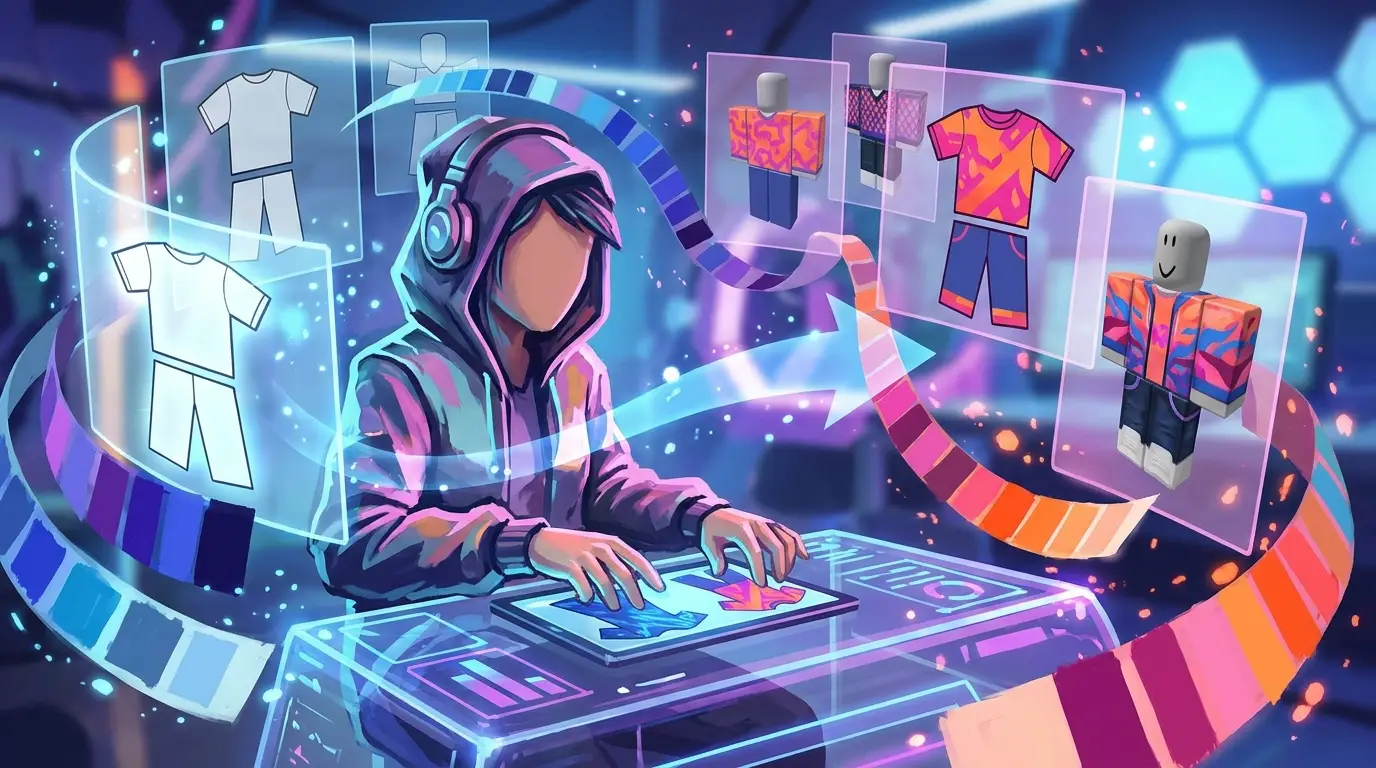
roblox clothes maker Guide to New Upload Fees
If you use a roblox clothes maker for shirts, pants, or classic T-shirts, things aren’t as straightforward as they used to be. What used to feel like a cheap creative hobby now involves more review steps, added fees, and more pressure to get each upload right the first time. That matters even more for solo creators, small studios, and players who want to try out ideas before publishing, which is probably a large part of the audience.
The biggest change is straightforward: classic 2D clothing now comes with an upfront cost. That means each design decision carries more weight than it did before. A weak upload, a copied idea, or a badly fitting template can cost Robux before it makes a single sale. If you also make CS2 skins, CS:GO finishes, FiveM clothing packs, or GTA roleplay assets, that’ll probably sound familiar. In more established creator markets, the bar usually rises over time, and that’s the same pattern here.
This guide breaks down what changed, what the fees actually mean, why Roblox made that call, and how to adjust your workflow without burning Robux. If you’re trying to stay profitable and keep your work original, it lays out a practical way forward, with specific help on the fee changes, the reasons behind them, and how to avoid wasting Robux.
What changed for classic clothing uploads
The main update any Roblox clothes maker should know is this: Roblox now handles classic clothing more like a managed marketplace item, instead of just a basic file upload. Research linked to Roblox’s 2026 rollout says classic T-shirts, shirts, pants, and similar items moved to a fee-based system, with 80 Robux per submission often mentioned as the standard upload cost and 10 Robux as the publishing advance for classic items, so those are two separate costs. That’s the detail people often miss most.
| Item or Requirement | Fee or Threshold | Period / Status |
|---|---|---|
| Classic T-shirt upload fee | 80 Robux | Reported effective July 14, 2026 |
| Classic shirt upload fee | 80 Robux | Reported effective July 14, 2026 |
| Classic pants upload fee | 80 Robux | Reported effective July 14, 2026 |
| Classic item publishing advance | 10 Robux | Current documented structure |
| Earlier proposed upload fee | 200 Robux | Proposal before revision |
| Earlier proposed publishing advance | 600 Robux | Proposal before revision |
This matters because a lot of creators still remember screenshots from the earlier proposal. If you saw posts mentioning 200 and 600 Robux, those numbers came from the first plan, not the lower pricing tied to the later rollout. So if older tutorials or Discord advice feel inconsistent, that’s usually why, and yes, it still confuses people. In most cases, the mismatch comes from outdated info still going around, not from someone trying to mislead anyone.
Roblox also makes a clear distinction between an upload fee and a publishing advance. It’s pretty simple: you may pay to submit the asset, and then there can be a separate cost to publish it for sale. Official docs also say fees usually aren’t refunded if moderation rejects the item. Because of that, clean files and policy-safe artwork matter even more now. Checking image size, template alignment, and policy issues first can often save Robux.
Before you spend Robux on mistakes that were probably avoidable, it helps to check Roblox Clothes Template Sizes and Layout Tips for the basic template stuff. You can also compare workflows in Roblox Shirt Maker vs Template Maker if you’re deciding which tools fit your process best.
Why Roblox added fees and stricter rules
At the start, these changes can be annoying. They usually make more sense, though, once you look at the bigger Roblox economy. For the 12 months ending June 30, 2025, Roblox reported more than $1 billion paid through DevEx and more than 29,000 creators taking part. And in Q1 2025 alone, creator earnings reached $281.6 million.
| Creator Economy Metric | Figure | Period Covered |
|---|---|---|
| DevEx payouts | More than $1 billion | 12 months ending June 30, 2025 |
| Participating DevEx creators | More than 29,000 | 12 months ending June 30, 2025 |
| Median DevEx creator earnings | $1,440 | 12 months ending June 30, 2025 |
| Creator earnings | $281.6 million | Q1 2025 |
| Developers earning over $1 million | More than 100 | Prior 12-month period cited in Q1 2025 release |
Those figures make one thing pretty obvious: Roblox isn’t a small hobby platform anymore. It’s now a large digital marketplace, and that changes quite a bit. Once platforms reach this scale, they usually tighten moderation and identity checks and bring in stricter monetization rules to cut down on spam, copycat uploads, and throwaway accounts.
As a whole, the community is on pace to exceed $1 billion of earnings for the full year.
That quote gives helpful context for the bigger picture. Roblox is trying to balance creator opportunity with more control over the marketplace, and the company has also framed these changes around building a ‘safer marketplace.’ In practice, that likely means more identity verification, stronger expectations around originality, and less tolerance for low-effort uploads, so yes, the rules are stricter. For serious creators, that may be good news: less spam and better visibility for stronger work in search and marketplace listings. Casual users may not see it that way, and that’s understandable. It’s clearly harder to get started.
How a roblox clothes maker can avoid wasting Robux
Uploading less isn’t really the best move here. It’s usually better to upload with more purpose. A roblox clothes maker probably needs a tighter production flow now, similar to how creators in CS2, CS:GO, FiveM, and GTA communities already handle skins or server assets before anything goes live.
Start with concept filtering first. Don’t start drawing yet, ask a few basic questions first. Is the design original? Does it fit the avatar cleanly on the body? Does it actually fill a use case, like a school uniform, streetwear set, jeans line, roleplay pack, or a creator brand drop? If those answers feel shaky, it’s often better not to upload it yet and give it a little more time.
One useful approach is building a test-first pipeline next. Use mockups, flat previews, and some avatar planning before the final export. It’s usually better to keep that first pass short.
If organizing outfit ideas is the hard part, Roblox Avatar Template Guide for Better Outfit Planning helps cut down on random trial and error. You can also review Best Roblox Design Tool for Shirts, Pants, and Skins to compare editing options before you upload.
Then check the technical side:
Pre-upload checklist for a roblox clothes maker
- make sure the panels line up cleanly, especially along the sides
- take a close look at how the sleeve and torso seams flow
- if the edges seem blurry, zooming in often makes issues easier to spot
- remove copied logos and any brand marks that could be risky
- review modesty coverage and overall body exposure
- export a final clean version rather than a draft file
Allow advertising and social cookies to watch embedded videos.
For mobile-first creators, it’s usually smart to be extra careful. Smaller screens often hide alignment problems, and that can be easy to miss. If that’s the setup, read How to Create Roblox Clothes on Mobile before spending Robux on uploads made from phone-created files.
That’s also where platforms like Alive Games can fit into the process. Instead of using them only at the end, creators can build a more organized asset workflow to refine ideas, test different versions, and keep their design system organized, which often saves time.
Creators who also work on other cosmetic assets may find useful crossover ideas in the CS:GO Skin Maker Guide for First-Time Designers.
Who still benefits from the new system
Not every creator is affected in the same way. The people who likely lose the most are casual uploaders making one-off items without much planning. If someone just wants to post a few personal pieces now and then, the economics are worse than they used to be. Every item costs money, and that pressure can build up fast, especially when the goal is just to test ideas.
The creators most likely to benefit are the ones already working with repeatable systems. Think of a small clothing brand inside Roblox, a roleplay group with matching uniforms, a studio testing bundles across different game communities, and similar teams that already have a clear setup. Those users usually already think in collections, variants, and what fits their audience. That mindset is already there, which gives them a real head start.
Rush Bogin, creator of Rush X, described the business side of creating on the platform this way:
Building a brand, managing partnerships, even handling taxes, there's so much I've learned about running a business that I never expected to learn just from creating on Roblox.
That’s the real shift. Roblox clothing is moving away from random uploads and getting closer to brand-led creation. For a game developer or modder, that may actually feel pretty familiar. In FiveM or GTA multiplayer, identity packs often matter a lot. In CS2 and CS:GO, finish quality and theme consistency matter too. Roblox is pushing clothing creators in that direction as well: be original, be intentional, and publish with a clear theme. I think that’s a very big change.
The hidden costs most creators forget to count
The 80 Robux fee gets most of the attention, but it’s not the only cost that matters here. Time matters too. Revisions can add up fast, and rejected uploads cost something too. Premium requirements can also change the numbers, especially when someone is only trying a small batch of designs.
Forum-based reporting tied to the 2026 update said that publishing 2D clothing required an active Premium 1000 or 2200 subscription. It also suggested that accounts without the required active subscription could risk losing sale status for existing 2D items starting August 1, 2026. Once identity verification requirements are added, the process starts to feel much more serious than older beginner guides usually suggest, which is probably surprising for some people.
There’s a creative cost here too. Cheap template flipping and copycat shirt spam often seem a lot less appealing when every upload comes with a fee. That may sound a bit harsh, but it could improve the marketplace over time and leave more room for creators with a real point of view.
Roblox policy teams have also shown that clothing rules connect to broader avatar safety standards and coverage rules.
Our modesty layer requirements are meant to ensure that when clothing is unequipped or only some parts of the body are clothed, the uncovered avatar remains appropriately covered.
So this goes beyond money. Compatibility usually matters here. Moderation matters too, and platform trust often matters as well.
A smarter publishing strategy for serious creators
If someone wants to keep making Roblox clothing, there’s no need to panic. A better move is usually to be more selective. Think of each upload more like a product launch, even the smaller ones. Instead of putting out lots of items, make fewer pieces and give more attention to each one. One helpful approach is testing themes in batches. Pants and shirts can be made as matching lines, and visual systems that already work well can be reused instead of rebuilding everything from scratch every time, which often saves more time than people expect.
The broader Alive Games audience already has an advantage here. Many modders and asset creators know this pipeline-style approach from skins, decals, uniforms, and multiplayer customization work. The thinking is basically the same: make a plan, test it, adjust it, then publish and see how it does.
A simple strategy looks like this:
Better publishing model
- sketch 5 ideas
- cut the weakest 3
- refine the best 2
- test them on avatar concepts
- upload only the design with the clearest use case
- track which style gets attention or leads to sales
Simon Burgess, creator of SharkBite, explained why many creators still pick Roblox, even with tighter rules:
For devs who are just starting out, it's hard to pay for data storage, data hosting, game engine, server hosting. Roblox really gives you everything.
That’s a good reminder. Uploading is harder now, harder than it was before. But Roblox still tends to give creators a lot of reach, built-in ways to get their work in front of people, and real upside for people who are actually making things instead of just dumping files. In a lot of cases, that gives them a big audience, tools to publish inside Roblox, and a clearer route to sales. It’s not exactly easier, but for creators with a strong use case, it often still feels worth it.
Make each upload count
Roblox’s new 2D clothing fees are changing things for every Roblox clothes maker. That old habit of throwing up low-effort uploads is fading pretty fast, and it likely isn’t coming back. What replaces it’s a stricter system built around fees, verification, moderation, and tighter publishing standards, and that usually becomes clear right away. The main numbers to keep in mind are the 80 Robux upload fee and the 10 Robux publishing advance, along with possible Premium and identity requirements depending on how the items are meant to be sold.
The good side is that this doesn’t have to stop creativity. It just means creative work now needs more structure around it. A better workflow helps, and testing before upload, even with a quick review, can save wasted Robux. It also helps to steer clear of copied ideas and spend more time on collections, roleplay use cases, a cleaner visual style, and designs that actually feel finished. If you already make customization assets for Roblox, FiveM, GTA, or Counter-Strike, you probably know polished work tends to do better than rushed work, and under these rules that can matter even more.
A practical way to see the new rules is to treat them like a filter. Let weaker ideas fall away earlier. Spend Robux on designs with a clear audience and clean execution. Then the fees can feel less like a wall and more like a quality check. That’s often how a serious creator keeps going.